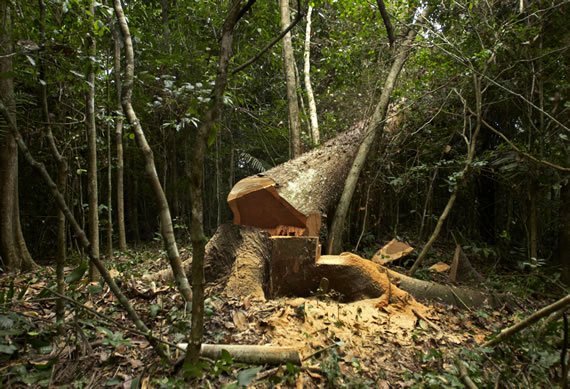
7 March 2011 - Aparte de reconocer ante la Embajada de EE.UU. que entre el 70 y 90% de la exportación de caoba provenía de la tala ilegal, el Gobierno Peruano también sabía que algunos narcotraficantes estaban involucrados en el transporte de dicha madera con el fin de ocultar paquetes de droga, así lo informó el cable de Wikileaks 61359 (2006), publicado el 22 de febrero por el diario El Comercio.
El informe redactado por el ex embajador de EE.UU. en el Perú, James Struble, destaca también que del 2002 al 2006, se exportó de manera ilegal unos 60 mil metros cúbicos por año de caoba de hoja ancha, pese a ser una de las especies en peligro de extinción, como indica la Convención sobre el Comercio Internacional de Especies Amenazadas de Fauna y Flora Silvestres (CITES).
Según el documento, Estados Unidos es el mayor comprador de caoba del Perú, llegando a importar el 88% del total al 2005. Asimismo, se indica que parte de la madera es extraída de áreas protegidas (lo cual está prohibido) y de las zonas habitadas por comunidades indígenas, llegando a pagar precios por debajo del mercado.
Otro punto importante es que en algunos casos los madereros están sometidos a trabajos forzados, de acuerdo con el Organismo Internacional de Organización del Trabajo (OIT).
CONCESIONARIOS FALSIFICARON DOCUMENTOS
Por otro lado, la Embajada también destaca que el ex Instituto de Recursos Naturales (INRENA) evaluó las concesiones encargadas de la tala de caoba y se dieron con la sorpresa de que el 60% presentaban infracciones graves, como la falsificación de documentos, sobornos, así como la extracción de madera fuera de los límites permitidos.
El cable también señala que el INRENA, luego de las denuncias periodísticas, se había comprometido a tomar medidas para frenar la tala ilegal de los mismos concesionarios, pero pasado un tiempo, nada había cambiado.
_______________________
Comunicación intercultural para un mundo más humano y diverso
/http%3A%2F%2Fwww.inforegion.pe%2Fwp-content%2Fuploads%2Fcaoba.jpg)
.
.
Peru’s government has secretly admitted that 70-90% of its mahogany exports were illegally felled, according to a US embassy cable revealed by Wikileaks. http://servindi.org/actualidad/40753
Furthermore, Peru’s government is aware that the illegal timber is being ‘laundered’ using ‘document falsification, timber extraction outside the concession boundaries and links to bribes’.
The revelation will embarrass several US DIY stores, who have all admitted to Survival International that they continue to import Amazonian hardwoods. Home Depot, Lowe’s and Lumber Liquidators have all confirmed they use the timber in their products.
Then-US ambassador to Peru James Struble quoted ‘unofficial INRENA estimates’ in the 2006 cable. (INRENA was the government’s Natural Resources Institute).
The ambassador’s comments paint a damning picture of Peru’s forestry mismanagement.
According to the cable, the US imported 88% of Peru’s mahogany exports in 2005, highlighting its significant role in the country’s extensive illegal logging trade. The majority of Peru’s endangered mahogany remains destined for US shores today.
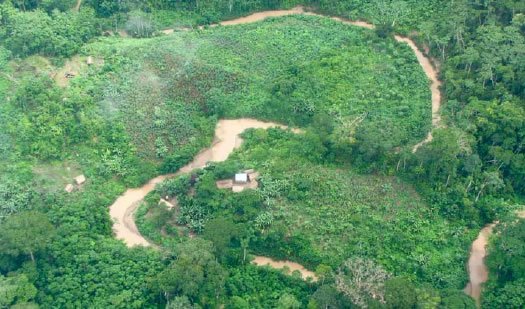
The news comes just weeks after illegal logging in Peru made international headlines after it emerged that loggers have infiltrated protected areas inhabited by uncontacted tribes, forcing them to flee across the border into Brazil.
The loggers pose a grave threat to uncontacted Murunahua Indians who could be wiped out by diseases brought by outsiders or face inter-tribal warfare if they are pushed off their lands.
Survival is urging the Peruvian government to ensure that the Murunahua’s land is properly protected. The Murunahua reserve lies just across the border from where the Brazilian uncontacted Indians were photographed recently. It is home to an unknown number of uncontacted Murunahua Indians. Some Murunahua individuals, however, have been contacted in recent years and live outside the reserve
Survival’s Director, Stephen Corry, said today, ‘The ambassador’s cable shows the alarming extent to which the authorities were aware of illegal logging in Peru, did not admit it, and did little to stop it. It beggars belief that five years on we are still seeing systematic illegal logging and a complete failure to safeguard land inhabited by vulnerable tribes. Consumers in the US and Europe simply can’t rely on documents that purport to show Peruvian mahogany is sustainably sourced, as these are clearly not worth the paper they’re written on.’
—
To read this story online: http://www.survivalinternational.org/news/7061
DIRE MAHOGANY SITUATION
Peru exports the most broad leaf mahogany
in the world, a majority of it to the U.S. Much of the
exports are likely from illegal logging, violating Peruvian
law and the CITES international convention against
trafficking in endangered species. The GOP, NGO community
and Peruvian logging industry agree that illegal logging is
a problem. Post has identified serious deficiencies in GOP
regulator INRENA’s ability to police the logging industry,
formal and informal. The formal forest products industry,
concerned about legal challenges to mahogany exports,
appears interested in working to reduce illegal logging.
Post is exploring options such as applying for OES-I Qoject
funds and realigning USAID programming.
END SUMMARY.
id: 61359
date: 4/21/2006 14:51
refid: 06LIMA1534
origin: Embassy Lima
classification: UNCLASSIFIED//FOR OFFICIAL USE ONLY
destination: 06LIMA2444
header:
VZCZCXYZ0001
RR RUEHWEB
DE RUEHPE #1534/01 1111451
ZNR UUUUU ZZH
R 211451Z APR 06
FM AMEMBASSY LIMA
TO RUEHC/SECSTATE WASHDC 9925
INFO RUEHBO/AMEMBASSY BOGOTA 3287
RUEHBR/AMEMBASSY BRASILIA 6688
RUEHBU/AMEMBASSY BUENOS AIRES 2346
RUEHCV/AMEMBASSY CARACAS 9334
RUEHLP/AMEMBASSY LA PAZ APR QUITO 0260
RUEHSG/AMEMBASSY SANTIAGO 0437
RUEHRC/USDA FAS WASHDC//USD 1440
RUCPDOC/DEPT OF COMMERCE WASHINGTON DC
RUEATRS/DEPT OF TREASURY WASHDC
————————- header ends ————————
UNCLAS LIMA 001534
SIPDIS
DEPT FOR WHA/AND, EPSC AND OES/ETC,ENV
BRASILIA FOR ESTH HUB – J STORY
USAID FOR LAC, EGAT
USTR FOR B HARMANN, M BURR
COMMERCE FOR M CAMERON
USDA/AS/FAA/BAILLEY AND USDA/FAS/ITP/FSTSD/BREHM
SENSITIVE
SIPDIS
E.O. 12958: N/A
TAGS: SENV, ETRD, EINV, EAID, ECON, PGOV, SNAR, PE
SUBJECT: ILLEGAL LOGGING THRIVES IN PERU
REF: LIMA 2444
1. (SBU) SUMMARY: Peru exports the most broad leaf mahogany
in the world, a majority of it to the U.S. Much of the
exports are likely from illegal logging, violating Peruvian
law and the CITES international convention against
trafficking in endangered species. The GOP, NGO community
and Peruvian logging industry agree that illegal logging is
a problem. Post has identified serious deficiencies in GOP
regulator INRENA’s ability to police the logging industry,
formal and informal. The formal forest products industry,
concerned about legal challenges to mahogany exports,
appears interested in working to reduce illegal logging.
Post is exploring options such as applying for OES-I Qoject
funds and realigning USAID programming. END SUMMARY.
DIRE MAHOGANY SITUATION
———————————-
2. (U) Peru now is the world’s largest exporter of broad
leaf mahogany, according to thQatest report of the
International Tropical Timber Organization (ITTO). Brazil
reportedly no longer allows legal export of broad leaf
mahogany, and the Bolivian government is reducing legal
exports due to its declining stocks. Legal exports of
Peruvian mahogany have declined steadily since, according to
the 2005 report of the GOP’s natural resources monitoring
and enforcement agency, INRENA. Since 2002, the agency’s
estimate of illicit exported mahogany has been 60,000 cubic
meters per year. Broad leaf mahogany continues as an
endangered species under Appendix II of the International
Convention against Trafficking in Endangered Species
(CITES). The high selective extraction of reproducing
trees, the slow reproduction rate of wild mahogany, and the
inability so far of silviculturalists to develop healthy
mahogany plantations have combined to cause a steady decline
in mahogany stocks.
PROBLEMS WITH MAHOGANY BUYERS AND SELLERS
————————————————————-
3. (U) Ten firms with INRENA permits account for over 85
percent of Peru’s mahogany exports. The United States
continues to be by far the largest importer of mahogany
importing 88 percent of Peru’s total 2005 mahogany exports.
Unofficial INRENA estimates indicate that 70-90 percent of
all mahogany exported in 2005 originated from illegal
sources.
4. (SBU) INRENA’s current verification process, implemented
as a result of USAID support, is confirming that mahogany is
being harvested not from the commercial concessions but from
protected areas (where commercial extraction is prohibited)
and from areas in indigenous territories different than
those specified in INRENA-approved logging plans. INRENA
must approve all logging plans to extract mahogany legally
from commercial forestry concessions, indigenous community
lands, and agricultural land with remnant forests.
5. (SBU) Reliable INRENA sources and civil society groups
report that mahogany loggers exploit indigenous communities
by paying below-market prices. The loggers also are
involved in forced labor, according to the International
Labor Organization (ILO). Moreover, commercial timber
extraction from forested remnants of agricultural land is
considered the most common system to launder illegal timber.
There is a long history of extracting mahogany from remnant
forests and the origin of the cut timber is hard to trace.
PERU SETS QUOTAS AT LAST
————————————
6. (SBU) Despite domestic political pressure against the
measure, INRENA (with USG support) set in May 2005 Peru’s
first mahogany export quota. INRENA established the quota
for 2005 at 23,621 cubic meters (m3). INRENA concluded that
an export quota was the most cost-effective and
scientifically defensible way to manage the resource and
fulfill CITES requirements after it verified, with direct
USAID support, 52 concessions. The verification process
showed that 60 percent of these concessions presented
serious infractions, including document falsification,
timber extraction outside the concession boundaries and
links to bribes. The other 40 percent showed they were
complying with the minimal management standards per Peruvian
law, but still required corrections. None of the
concessions verified showed high management standards. As a
result, INRENA set a mahogany quota, suspended the granting
of new concessions and requested USAID-targeted support to
correct the identified weaknesses.
7. (U) INRENA officials said that a quota allowed official
exports to be controlled while better methods were developed
to farm mahogany in plantations or foster regeneration of
wild stocks, and until a reliable supervision system could
be put in place. INRENA set a quota for 2006 at 23,239 m3.
As of March 2006, Peru has exported 5,698.57 m3, most of
which has gone to the United States. (Note: Given the
acknowledged problem with illegal logging, we were surprised
that INRENA reduced the quota by only 394 m3 for 2006. End
Note.)
8. (SBU) INRENA based the 2005-06 quota on various
criteria. This included: historical exports; requirements
for non-detrimental legal exports under Appendix II of
CITES; and INRENA projections of available commercial timber
volume for the harvest seasons. INRENA considered as well
NGO and ITTO data on the continuing reduction of mahogany
populations in Latin America. The National Agrarian
University (UNALM) is the CITES scientific authority for
“non-detriment” in Peru. The University has been unable to
produce a definitive census or other reliable monitoring
system of mahogany stocks; UNALM finally delivered to
ESTHoff on April 3 a promised preliminary census. UNALM’s
report states that Peru’s mahogany population has declined
dramatically, from 768,220 trees (224,733 in protected
natural areas) to 304,630 trees (87,888 in protected natural
areas).
MISPLACED SUPPORT FROM CITES AUTHORITIES...
9. (SBU) At the last international CITES meeting, in
October 2005, INRENA presented a series of accomplishments
it claimed had been made in the fight against the illegal
cutting of mahogany. When the CITIES Commission lauded
Peru’s gains in the management of forest resources and
environmental governance, it also noted the fragility of
these gains. Highlighting future challenges, the Commission
identified the “increased powers” of an illicit forest
management cartel; the cartel’s strengthened linkages to
what it called the Coca Cartel; and the continued crisis in
institutional capacity. (Comment: Post does not believe
that there is either a single illicit logging cartel nor a
single coca cartel. End Comment.)
10. (SBU) At the CITES meeting, the GOP cited as an
accomplishment its computerized system to track mahogany
harvest, a system developed with USAID funding. Reliable
information indicates that data has consistently been mis-
entered or later altered at field locations, allowing
concessionaires to cut more lumber than they are legally
permitted. Post has suspected corruption for many months
and has consistently informed INRENA of these concerns. A
few weeks ago, when the story appeared in the media, INRENA
claimed it would address this situation. Nothing has
changed to date.
11. (SBU) INRENA at the last CITES meeting announced that
it was re-structuring itself to ensure greater “separation
of powers” among INRENA’s management, forest supervision
department (OSINFOR), and its departments for protected
areas and species. More than five months since the meeting,
the new structure has yet to be implemented. Post now has
reason to believe that the gains the GOP claimed last
October were simply not true. (Comment: Ironically, the GOP
has agreed to host in Lima the next CITES meeting. GOP lead
host agency, INRENA, has asked USAID for funding support.
Peru’s lack of CITES compliance could become an issue. End
Comment.)
GROWING NEXUS BETWEEN ILLEGAL LOGGING AND NARCOTRAFFICKING
——————————————————————- ———————
12. (SBU) The narcotrafficking presence on the eastern
slopes of the Andes puts even more pressure on mahogany and
cedar populations. Narcotraffickers with established
networks for moving coca paste and opium latex appear to be
getting involved in transport of illegal timber, for both
its profitability and its utility as concealment. For
example, GOP officials and mining developers familiar with
mine exploration activities at the northern border with
Ecuador told Econoff in July that a local Mayor has been
involved in both illegal logging and opium poppy production.
13. (SBU) Police in Loreto Department told Econoff in June
and September that they continue to find coca paste packages
hidden in mahogany and cedar shipments. The transported
mahogany trunks, or stacked loads of sawn lumber, are so
huge, and the number of shipments so massive that police
catch only a tiny fraction of the coca that they estimate is
transported from the Andes downriver to Brazil. DEA’s Lima
Country Office — which actively assists GOP law enforcement
in eliminating the concealment of illicit drugs in wood
shipments, believes that suspected shipments are large.
USAID RESPONSE
———————
14. (U) Consistent with its overall objective of assisting
GOP institutions to take the lead and become accountable for
sustainable natural resources management and conservation of
biodiversity, USAID continues to support transformational
development interventions. USAID funds and advises INRENA
on issues related to sustainable natural resources
management, management of protected areas, institutional
capacity strengthening, and policy and legal controls.
USAID decided recently to discontinue support for the
computer registration program because of the credible
allegations of corruption and the lack of INRENA action to
address the situation.
15. (U) USAID is pursuing the most effective way of
combating illegal logging, through legal forest management.
USAID is working with INRENA to achieve international
certification of forests and the lumber export chain,
limiting participation in programs to operators whom USAID
can certify. Working with a small group of private
concessionaires and 10 different indigenous communities, the
objective is to certify approximately 200,000 hectares by
December 2006. The initial results are promising, but the
task is daunting.
PRIVATE SECTOR CONCERNED ABOUT ESA LITIGATION
——————————————————————-
16. (SBU) In late March and early April meetings with
Econoff and USAID Environmental officer, Peruvian
Association of Exporters (ADEX) representatives expressed
their concern about what misrepresentations of fact in the
copy of Notice to Sue, written by NGO Natural Resources
Defense Council (NRDC) under the Endangered Species Act
(ESA). During the meeting ADEX representatives admitted
that the problem was great, but that there existed a core
group of exporters interested in “doing this right.” ADEX
members are particularly concerned about current lumber
shipments soon to depart Peru bound for the U.S.
PARTNERSHIP WITH THE PRIVATE SECTOR
—————————————————-
17. (SBU) While Peru’s forested land accounts for over 64
percent of the country’s surface, forestry accounts for only
one percent of GDP. One of the most compelling issues
identified towards the achievement of forest and
biodiversity sustainability and promotion of licit
livelihoods is to promote international standards for
certification and chain of custody. The forest products
firms in Peru appear to want to change that. ADEX recently
acknowledged in a public presentation the problem of illegal
logging, the opportunity to increase exports and GDP and
some suggestions for reforming GOP oversight of the forest
products industry (Reftel).
COMMENT: MUCH TO BE DONE
————————————
18. (SBU) Peru’s forest management has been trouble for
years, and its legitimate mahogany exports for the important
U.S. market are in jeopardy. Peru risks violating not only
CITES, but also the recently-signed free trade agreement
with the United States, which will require Peru to enforce
its local and international obligations. If the GOP does
not maintain its quota in the face of continuing illegal
harvest, it risks suspension of imports by the European
Union, destruction of an endangered species and a defeat of
the rule of law. U.S. wood importers need to join the
effort by investing in the system’s improvement.
19. (U) The U.S-Peru free trade agreement may provide an
additional tool to move Peru along a path of compliance and
conservation, promoting legal trade with the United States.
Post will continue discussions with industry representatives
on how to promote greater industry compliance with
international standards. The International Wood Products
Association has also expressed interest in helping to assure
legal U.S. imports. Logging/export certification, if
properly funded, could fit into a Post trade capacity
building program for implementation of the U.S. trade deal.
Post is applying for an OES-I project grant for this
purpose.
20. (U) Embassy will raise with appropriate GOP officials
the need to maintain a credible approach to mahogany exports
and adhere to international forest and chain of custody
certification standards. USAID will continue to work with
INRENA, the private sector and indigenous populations to
ensure that INRENA acquires the needed capacity to be held
accountable for the proper and sustainable management of
natural resources in Peru. Advancing the responsible
promotion of the forest sector is the best alternative to
the illicit livelihoods that sustain many in the current
forest sector.
21. (U) This cable was co-drafted with USAID Lima.
STRUBLE
===================CABLE ENDS============================
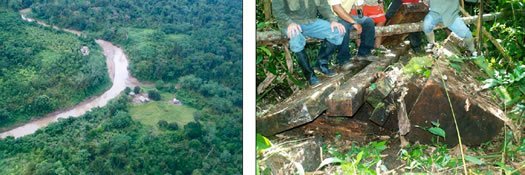
Los madereros ilegales invaden las dos reservas donde viven.
Cualquier contacto con otros seres humanos puede poner en peligro su vida, ya que tiene un sistema inmunitario muy vulnerable a enfermedades foráneas.
Solo quedan 600 murunahuas y mashco-piros en el Perú.
Las reservas no valen tan siquiera el papel en el que están escritas

Los murunahua y mashco-piro: indígenas del Perú en peligro de extinción
Descargar informe de UAC
/http%3A%2F%2Fwww.terra.com.pe%2Faddon%2Fimg%2Fnoticias%2Fnacional%2F1bafe47no_contactados_selvap.jpg)
----
Escribió Malcolm Allison


/fdata%2F3047213%2Favatar-blog-1104732428-tmpphpCAT9U5.jpeg)


/http%3A%2F%2Fwww.contrainjerencia.com%2Fwp-content%2Fuploads%2F2014%2F07%2Ftimthumb.php_1.jpg)
/http%3A%2F%2Fwww.radio36.com.uy%2Fentrevistas%2F2014%2F08%2F01%2Fclip_image002_0546.jpg)
/http%3A%2F%2Fwww.radio36.com.uy%2Fentrevistas%2F2014%2F08%2F01%2Fclip_image002_0545.jpg)
/http%3A%2F%2Fimg.youtube.com%2Fvi%2FIq04dnHwpYc%2F0.jpg)
