

/fdata%2F3047213%2Favatar-blog-1104732428-tmpphpCAT9U5.jpeg)
La estrategia del Presidente Rafael Correa en el "NEW DEAL" con el Mundo Desarrollado para proteger los bosques, sus culturas y el clima planetario

/http%3A%2F%2Fwww.ecuador365.com%2Fjungle%2Fyasuni%2Fhuaorani08.jpg)
“Fuera de todos los aspectos negativos que han venido habiendo como resultado de producción de petróleo en el Oriente, el que ha tenido el impacto más grande en las personas indígenas, aparte de la contaminación, ha sido la violación perpetrada por misioneros de su diario vivir.
Cuándo Texaco comenzó a moverse al Oriente del Ecuador, fue la tribu Huaorani la que presentó el obstáculo más grande a los esfuerzos de Texaco. Varias tentativas para sobornar a los Huaorani, dejando caer paquetes desde el aire, conteniendo baratijas de metal y algunos suministros de alimento, fracasó y Texaco inició el uso de la violencia contra las personas indígenas (Kimmerling, 78). Los estallidos violentos con explosivos de Texaco, espantaron a muchos de los Huaorani, que por temor fueron reducidos en Tihueno, la comunidad indígena permanente de Rachel Saint."“Después que los misioneros tuvieron éxito en ayudar en las tentativas de Texaco para vencer los obstáculos que las personas indígenas ofrecieron, más impactos llovieron sobre los indígenas continuamente. Mientras el desplazamiento y la recolocación de los pueblos originarios ocurrían con costos socioambientales gigantescos, Texaco no perdió tiempo y empezó la construcción de Vía Auca, una camino carrozable que entraba sesenta millas en el centro de tierras indígenas tradicionales (Kimmerling, 85).
Propuesta beneficia a nativos y se planteará en asamblea de la ONU el 27 de setiembre.
Ecuador propone a la comunidad internacional que contribuya con al menos US$3.600 millones, equivalentes a la mitad de los recursos que percibiría en caso de explotar el crudo del ITT.
INICIATIVA ECOLÓGICA
Ecuador expondrá en la ONU su proyecto Yasuní
Busca una compensación para no explotar yacimiento petrolero en Amazonía
Domingo 12 de Setiembre del 2010
QUITO [EFE]. El vicepresidente de Ecuador, Lenin Moreno, anunció que participará en la próxima asamblea de Naciones Unidas y expondrá allí sobre el proyecto ambientalista Yasuní-ITT.
Esa iniciativa, que es un plan insignia del Gobierno de Ecuador, busca no explotar un yacimiento de petróleo en la Amazonía y evitar la emisión a la atmósfera de más de 400 millones de toneladas de dióxido de carbono, a cambio de una compensación económica internacional.
Moreno, en el habitual informe sabatino del Ejecutivo, en reemplazo del presidente de su país, Rafael Correa, precisó que participará en la asamblea de la ONU el 27 de setiembre.
La iniciativa prevé mantener bajo tierra las reservas petroleras de los campos Ishpingo, Tambococha y Tiputini, situados en el Parque Nacional Yasuní, que ascienden a unos 846 millones de barriles de petróleo.
Ecuador propone a la comunidad internacional que contribuya con al menos US$3.600 millones, equivalentes a la mitad de los recursos que percibiría en caso de explotar el crudo del ITT.
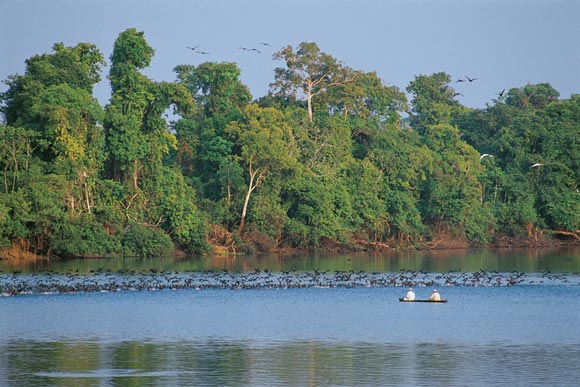
El Parque Nacional Yasuní, donde viven pueblos indígenas no contactados, ha sido considerado uno de los lugares de mayor biodiversidad en el planeta.
Fue creado en 1979 y declarado Reserva Mundial de la Biósfera en 1989. Alcanza las 982.000 hectáreas en la cuenca del alto Napo en la Amazonía.
Alemania, España, Japón, Italia y Chile, entre otros países, han ofrecido apoyar la iniciativa, aunque el Gobierno Ecuatoriano ha aclarado que si no logra concretar las contribuciones, explotará el yacimiento con la mejor tecnología disponible para minimizar el impacto en el Yasuní.
EL DATO
Megadiversidad
Con 2.274 clases de árboles y arbustos, Yasuní alberga en una hectárea 655 ejemplares, más del total de especies de árboles de EE.UU. y Canadá.
http://www.uca.es/…/colaboraciones/yasuni-oro-verde
/http%3A%2F%2Fwww.ecolopop.info%2Fwp-content%2Fuploads%2F2007%2F05%2Fhuaorani.jpg)
/http%3A%2F%2Fwww.amazoniaporlavida.org%2Fes%2Fimg%2Find.jpg)
/http%3A%2F%2Fwww.kempery.com%2Fimages%2Famazonia%2Flodge-bataburo%2Flb-huaorani-3.jpg)
| THE HUAORANI | |
|
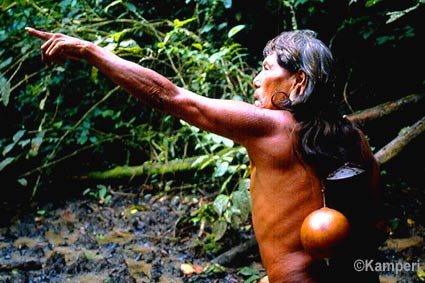
< They revere the jaguar and call themselves, Huaorani which means "human beings" or "the people," and refer to everyone else as cowode or "non-humans." Up until four decades ago the Huaorani still used stone axes and maintained a thoroughly traditional hunter and gatherer lifestyle in their extremely isolated and monkey-rich rainforest haven, and enrich their diet with the of their manioc fields. /http%3A%2F%2Fwww.kempery.com%2Fimages%2Fimg2007%2Fecuador_amazon_huarani_2.jpg) /http%3A%2F%2Fwww.kempery.com%2Fimages%2Fimg2007%2Fecuador_amazon_huarani.jpg) However, like indigenous people all over the world who learn that they have natural resources other nations want, they are forced by those who make the rules to adapt as best they can to changing realities. One Huaorani clan, the Tagaeri or Taromenani, has moved deeper in the forest to shun all contact with the outside world. Other Huaorani communities have adopted ecotourism as a way to maintain control over their land, culture and resources. As a visitor to Ecuador, you can learn more about the Huaorani people and support their efforts of self-determination by joining one of the community-based tourism programs offered by Kempery. /http%3A%2F%2Fwww.kempery.com%2Fimages%2Famazonia%2Flodge-bataburo%2Flb-huaorani-2.jpg) /http%3A%2F%2Fwww.kempery.com%2Fimages%2Famazonia%2Flodge-bataburo%2Flb-huaorani-1.jpg)  |

/http%3A%2F%2Fwww.redturs.org%2Finicio%2Fimages%2Ffoto%2Fhuaorani_200.jpg)
“Out of all of the negative aspects that have come about as a result of oil production in the Oriente, the one that has had the greatest impact on the indigenous people, outside of the pollution, has been the encroachment of missionaries into their daily lives. Beginning in 1967 with Texaco’s discovery of the Oriente oil field, oil companies have constantly used missionaries as a method of quelling indigenous animosity and relocating the indigenous peoples from possible drilling sites. The missionaries used in these procedures have drastically reshaped the indigenous communities and are responsible for altering the behavioral practices that once served as a way of life for the indigenous peoples. Although Rachel Saint’s establishment of a permanent indigenous community precedes Texaco’s oil exploration (Kimmerling, 76), her role in the early years of Texaco’s oil production was momentous because of her success in aiding the relocation of the indigenous people.
“When Texaco first began to move into the Oriente, it was the Huaorani tribe that presented the greatest obstacle to Texaco’s efforts. Various attempts to bribe the Huaorani with air dropped packages containing metal goods and food supplies were unsuccessful and Texaco initiated the use of violence against the indigenous peoples (Kimmerling, 78). The violent outbreaks with Texaco scared many of the Huaorani, who in fear relocated to Tihueno, Saint’s permanent indigenous community.”
“After missionaries were successful in abetting Texaco’s attempts to overcome the obstacles that the indigenous people posed, further impact on the indigenous peoples continued. While the displacement and relocation of the tribes was occurring, Texaco lost no time and began construction on the Via Auca, a roadway that extends sixty miles deep into the center of traditional indigenous lands (Kimmerling, 85). The Via Auca was responsible for the deforestation of 2.5 million acres of rainforest and a government encouraged flood of settlers. The invasion of settlers and the pollution from oil production were both liable for the degradation of the rainforest, which brutally impacted the indigenous peoples who had not migrated to permanent indigenous communities. The surrounding lands that transcend the length of the Via Auca have been severely polluted, in addition to being colonized and deforested. The settlers inhabiting the land along the Via Auca have often held very tense relations with the Huaorani and other indigenous tribes, a tension which infringes on the indigenous peoples’ ability to live a life in accordance with longstanding cultural standards. Texaco’s practices in the areas encircling the Via Auca have contaminated the environment so harshly that the indigenous people residing these surrounding areas are no longer able to live a healthy life.”
/http%3A%2F%2Fyasuni-itt.gob.ec%2Ffiles%2F2010%2F07%2Fpresidente_rafael_correa.jpg)
Con conocimientos de kichwa, la lengua indígena más hablada en Ecuador, una Maestría en Economía en la Universidad de Lovaina, Bélgica, y un doctorado en la Universidad de Illinois de 2001, obtenido con su disertación "Tres ensayos acerca del desarrollo contemporáneo latinoamericano" tesis en que demuestra esencialmente que las reformas estructurales aplicadas en Latinoamérica a partir de los 80 fallaron en su cometido de fomentar el crecimiento. Mediante un análisis econométrico, Correa argumentó que las reformas no fueron causa del crecimiento, y que la liberalización de los mercados laborales perjudicó a la productividad de los países latinoamericanos http://es.wikipedia.org/wiki/Rafael_Correa
 |


/http%3A%2F%2Fwww.contrainjerencia.com%2Fwp-content%2Fuploads%2F2014%2F07%2Ftimthumb.php_1.jpg)
/http%3A%2F%2Fwww.radio36.com.uy%2Fentrevistas%2F2014%2F08%2F01%2Fclip_image002_0546.jpg)
/http%3A%2F%2Fwww.radio36.com.uy%2Fentrevistas%2F2014%2F08%2F01%2Fclip_image002_0545.jpg)
/http%3A%2F%2Fimg.youtube.com%2Fvi%2FIq04dnHwpYc%2F0.jpg)
